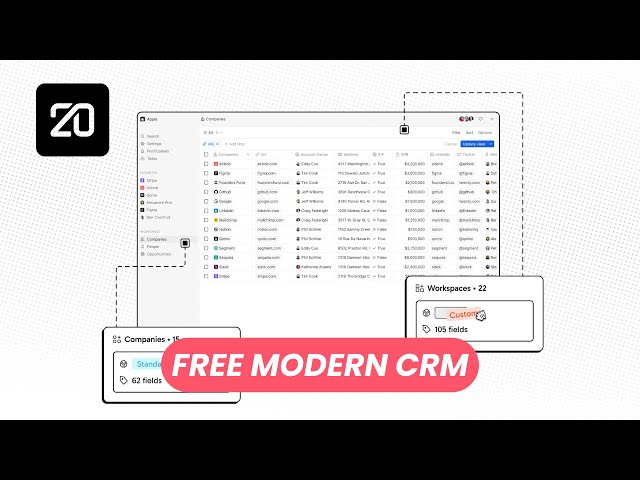
A customer relationship management (CRM) system is a software application that helps businesses manage and track their interactions with customers. Free and open source CRM systems are available for businesses of all sizes, and they offer a number of benefits over proprietary CRM systems.
One of the biggest benefits of using a free and open source CRM system is that it can save businesses money. Proprietary CRM systems can be expensive to purchase and maintain, while free and open source CRM systems are available at no cost. This can be a significant savings for businesses, especially small businesses and startups.
Another benefit of using a free and open source CRM system is that it gives businesses more control over their data. With a proprietary CRM system, businesses are often locked into using the vendor’s software and services. This can make it difficult to switch to a different CRM system in the future, and it can also limit businesses’ ability to customize the CRM system to meet their specific needs. With a free and open source CRM system, businesses have more control over their data and they can customize the system to meet their specific needs.
Free and open source CRM systems are a great option for businesses of all sizes. They offer a number of benefits over proprietary CRM systems, including cost savings, increased control over data, and the ability to customize the system to meet specific needs.
Free and Open Source CRM
Free and open source CRM (customer relationship management) systems are becoming increasingly popular among businesses of all sizes. These systems offer a number of advantages over proprietary CRM systems, including cost savings, increased flexibility, and the ability to customize the system to meet specific needs.
- Cost-effective: Free and open source CRM systems are available at no cost, which can save businesses a significant amount of money.
- Flexible: Free and open source CRM systems are not tied to a specific vendor, which gives businesses the freedom to switch to a different system in the future if needed.
- Customizable: Free and open source CRM systems can be customized to meet the specific needs of a business. This allows businesses to tailor the system to their unique workflows and processes.
- Secure: Free and open source CRM systems are just as secure as proprietary CRM systems. In fact, many free and open source CRM systems are used by large enterprises and government agencies.
- Supported: Free and open source CRM systems are supported by a large community of developers and users. This means that businesses can get help and support when needed.
Free and open source CRM systems are a viable option for businesses of all sizes. These systems offer a number of advantages over proprietary CRM systems, and they can help businesses save money, increase flexibility, and improve customer relationships.
Cost-effective: Free and open source CRM systems are available at no cost, which can save businesses a significant amount of money.
The cost-effectiveness of free and open source CRM systems is one of their key advantages. Businesses can save a significant amount of money by using a free and open source CRM system instead of a proprietary CRM system. Proprietary CRM systems can cost thousands of dollars per year, while free and open source CRM systems are available at no cost.
- Reduced upfront costs: Free and open source CRM systems do not require any upfront investment. This can be a significant savings for businesses, especially small businesses and startups.
- Reduced ongoing costs: Free and open source CRM systems do not require any ongoing licensing or maintenance fees. This can save businesses a significant amount of money over time.
- No vendor lock-in: Free and open source CRM systems are not tied to a specific vendor. This means that businesses can switch to a different CRM system at any time without having to pay any penalties.
The cost-effectiveness of free and open source CRM systems makes them a viable option for businesses of all sizes. Businesses can save a significant amount of money by using a free and open source CRM system, and they can also avoid the risk of vendor lock-in.
Flexible: Free and open source CRM systems are not tied to a specific vendor, which gives businesses the freedom to switch to a different system in the future if needed.
The flexibility of free and open source CRM systems is one of their key advantages. Businesses are not tied to a specific vendor, which gives them the freedom to switch to a different CRM system at any time without having to pay any penalties. This is in contrast to proprietary CRM systems, which often require businesses to sign long-term contracts and pay high switching costs.
The flexibility of free and open source CRM systems is important for a number of reasons. First, it allows businesses to avoid vendor lock-in. Vendor lock-in occurs when a business becomes dependent on a specific vendor for a particular product or service. This can make it difficult for businesses to switch to a different vendor, even if they are unhappy with the vendor’s products or services.
Second, the flexibility of free and open source CRM systems allows businesses to take advantage of new technologies and trends. As the CRM market evolves, new and innovative CRM systems are constantly being developed. Free and open source CRM systems allow businesses to easily switch to a new CRM system if they believe that it will better meet their needs.
Third, the flexibility of free and open source CRM systems gives businesses the freedom to customize the system to meet their specific needs. Businesses can add or remove features, change the user interface, and integrate the CRM system with other business applications.
The flexibility of free and open source CRM systems is a major advantage for businesses. It allows businesses to avoid vendor lock-in, take advantage of new technologies and trends, and customize the CRM system to meet their specific needs.
Customizable: Free and open source CRM systems can be customized to meet the specific needs of a business. This allows businesses to tailor the system to their unique workflows and processes.
The customizability of free and open source CRM systems is one of their key advantages. Businesses can add or remove features, change the user interface, and integrate the CRM system with other business applications to create a system that perfectly meets their needs. This is in contrast to proprietary CRM systems, which are often more rigid and difficult to customize.
The ability to customize a CRM system is important for a number of reasons. First, it allows businesses to tailor the system to their specific industry and business model. For example, a manufacturing company may need a CRM system that tracks inventory levels and purchase orders, while a retail company may need a CRM system that tracks customer loyalty points and purchase history.
Second, the ability to customize a CRM system allows businesses to improve their workflows and processes. For example, a business may want to customize its CRM system to automate tasks such as sending out invoices or generating reports. This can save businesses time and money, and it can also help to improve accuracy and efficiency.
Third, the ability to customize a CRM system allows businesses to integrate the system with other business applications. This can create a more seamless and efficient workflow for employees. For example, a business may want to integrate its CRM system with its accounting system or its marketing automation system.
The customizability of free and open source CRM systems is a major advantage for businesses. It allows businesses to create a CRM system that perfectly meets their needs, which can help them to improve their customer relationships, increase sales, and improve efficiency.
Here are some examples of how businesses have used free and open source CRM systems to meet their specific needs:
- A small manufacturing company used a free and open source CRM system to track customer orders, inventory levels, and purchase orders. This helped the company to improve its customer service and reduce its inventory costs.
- A retail company used a free and open source CRM system to track customer loyalty points and purchase history. This helped the company to identify its most loyal customers and develop targeted marketing campaigns.
- A nonprofit organization used a free and open source CRM system to track donor information, donations, and volunteer hours. This helped the organization to improve its fundraising efforts and better serve its donors.
These are just a few examples of how businesses have used free and open source CRM systems to meet their specific needs. The customizability of free and open source CRM systems makes them a valuable tool for businesses of all sizes.
Secure: Free and open source CRM systems are just as secure as proprietary CRM systems. In fact, many free and open source CRM systems are used by large enterprises and government agencies.
Free and open source CRM systems are often perceived as being less secure than proprietary CRM systems. However, this is not the case. Free and open source CRM systems are just as secure as proprietary CRM systems, and in some cases, they may even be more secure.
- Security features: Free and open source CRM systems offer a variety of security features, including encryption, access control, and intrusion detection. These features help to protect data from unauthorized access and theft.
- Community support: Free and open source CRM systems are supported by a large community of developers and users. This community helps to identify and fix security vulnerabilities quickly.
- Transparency: The code for free and open source CRM systems is publicly available. This allows security experts to review the code and identify any potential vulnerabilities.
Many large enterprises and government agencies use free and open source CRM systems. These organizations trust free and open source CRM systems to protect their sensitive data. For example, the US Department of Defense uses the free and open source CRM system SugarCRM to manage its customer relationships.
Free and open source CRM systems are a secure and reliable option for businesses of all sizes. Businesses can use free and open source CRM systems to protect their data and improve their customer relationships.
Supported: Free and open source CRM systems are supported by a large community of developers and users. This means that businesses can get help and support when needed.
One of the key advantages of free and open source CRM systems is that they are supported by a large community of developers and users. This means that businesses can get help and support when needed. This is in contrast to proprietary CRM systems, which are often supported by a single vendor. If a business has a problem with a proprietary CRM system, they may have to wait for the vendor to fix the problem. With a free and open source CRM system, businesses can get help from the community of developers and users. This can help businesses to resolve problems quickly and efficiently.
The community support for free and open source CRM systems is also important for businesses that need to customize their CRM system. Businesses can find developers and users who can help them to add or remove features, change the user interface, and integrate the CRM system with other business applications. This can help businesses to create a CRM system that perfectly meets their needs.
The support from the community of developers and users is a major advantage of free and open source CRM systems. Businesses can get help and support when needed, and they can also find developers and users who can help them to customize the CRM system to meet their specific needs.
FAQs about Free and Open Source CRM
Free and open source CRM systems are becoming increasingly popular among businesses of all sizes. These systems offer a number of advantages over proprietary CRM systems, including cost savings, increased flexibility, and the ability to customize the system to meet specific needs.
Here are some of the most frequently asked questions about free and open source CRM systems:
Question 1: Are free and open source CRM systems as secure as proprietary CRM systems?
Answer: Yes, free and open source CRM systems are just as secure as proprietary CRM systems. In fact, many free and open source CRM systems are used by large enterprises and government agencies.
Question 2: Are free and open source CRM systems supported?
Answer: Yes, free and open source CRM systems are supported by a large community of developers and users. This means that businesses can get help and support when needed.
Question 3: Can free and open source CRM systems be customized?
Answer: Yes, free and open source CRM systems can be customized to meet the specific needs of a business. Businesses can add or remove features, change the user interface, and integrate the CRM system with other business applications.
Question 4: Are free and open source CRM systems suitable for businesses of all sizes?
Answer: Yes, free and open source CRM systems are suitable for businesses of all sizes. These systems offer a number of advantages over proprietary CRM systems, including cost savings, increased flexibility, and the ability to customize the system to meet specific needs.
Question 5: What are some examples of free and open source CRM systems?
Answer: Some examples of free and open source CRM systems include SugarCRM, SuiteCRM, and Odoo.
Question 6: How do I choose the right free and open source CRM system for my business?
Answer: When choosing a free and open source CRM system for your business, you should consider your specific needs and requirements. You should also consider the size of your business, your budget, and your technical expertise.
Free and open source CRM systems offer a number of advantages over proprietary CRM systems. These systems are cost-effective, flexible, customizable, secure, and supported. Businesses of all sizes can benefit from using a free and open source CRM system.
If you are considering implementing a CRM system for your business, you should consider using a free and open source CRM system. These systems offer a number of advantages over proprietary CRM systems, and they can help you to improve your customer relationships, increase sales, and improve efficiency.
Tips for Using Free and Open Source CRM
Free and open source CRM systems offer a number of advantages over proprietary CRM systems, including cost savings, increased flexibility, and the ability to customize the system to meet specific needs. However, there are also some challenges to using free and open source CRM systems. Here are a few tips to help you get the most out of your free and open source CRM system:
Tip 1: Choose the right system for your needs.There are a number of different free and open source CRM systems available, each with its own strengths and weaknesses. It is important to choose a system that is a good fit for your business needs. Consider the size of your business, your industry, and your specific requirements.Tip 2: Get support from the community.Free and open source CRM systems are supported by a large community of developers and users. This community can be a valuable resource for getting help and support with your CRM system. There are a number of online forums and communities where you can ask questions and get help from other users.Tip 3: Customize the system to meet your needs.One of the biggest advantages of free and open source CRM systems is that they can be customized to meet your specific needs. This allows you to tailor the system to your unique workflows and processes. However, it is important to remember that customizing a CRM system can be a complex and time-consuming process.Tip 4: Keep your system up to date.Free and open source CRM systems are constantly being updated with new features and security patches. It is important to keep your system up to date to ensure that you are using the latest version of the software and that your system is secure.Tip 5: Be prepared to troubleshoot problems.Free and open source CRM systems are not always as polished as proprietary CRM systems. You may encounter some problems when using a free and open source CRM system. However, the community of developers and users can be a valuable resource for troubleshooting problems.SummaryFree and open source CRM systems can be a valuable tool for businesses of all sizes. However, it is important to choose the right system for your needs and to be prepared to troubleshoot problems. By following these tips, you can get the most out of your free and open source CRM system.
The Benefits and Challenges of Free and Open Source CRM
Free and open source CRM systems offer a number of advantages over proprietary CRM systems, including cost savings, increased flexibility, and the ability to customize the system to meet specific needs. However, there are also some challenges to using free and open source CRM systems, such as the need to choose the right system, get support from the community, and keep the system up to date.
Overall, free and open source CRM systems can be a valuable tool for businesses of all sizes. By choosing the right system and being prepared to troubleshoot problems, businesses can get the most out of their free and open source CRM system.
Youtube Video: